
Trelona Bait Stations vs. Termidor Liquid: Which Termite Defense Is Right for Your Cincinnati Home?
If you’ve looked into termite treatment options, you’ve probably come across two names: Trelona bait stations and Termidor liquid treatment. Both are effective. Both are widely used by licensed pest control companies in Cincinnati. But they work differently, they’re appropriate for different situations, and the right choice depends on what’s happening at your specific property.
Here’s a straightforward breakdown of how each works, what it’s best for, and how we think about the decision at Delhi Pest Control.
How Termidor Liquid Treatment Works
Termidor (fipronil) is a liquid termiticide applied to the soil around and under a structure — creating a treated zone that subterranean termites pass through as they forage. The product is non-repellent, meaning termites don’t detect or avoid it. When they contact the treated zone, they carry the active ingredient back to the colony through normal social behavior, eventually collapsing the colony.
Liquid treatment creates a fast, complete barrier and is generally the recommended approach when:
- There’s active infestation present in the structure — visible mud tubes, damage, or live termites
- The property has high-risk construction features like slab-on-grade, expansion joints, or direct wood-to-soil contact
- Rapid colony knockdown is a priority
The trade-off is that liquid treatment requires drilling into concrete slabs, rod-injecting soil around the foundation, and treating any potential entry point — it’s a more invasive application process. It’s also a one-time barrier that should be retreated on a defined schedule.
How Trelona Bait Stations Work
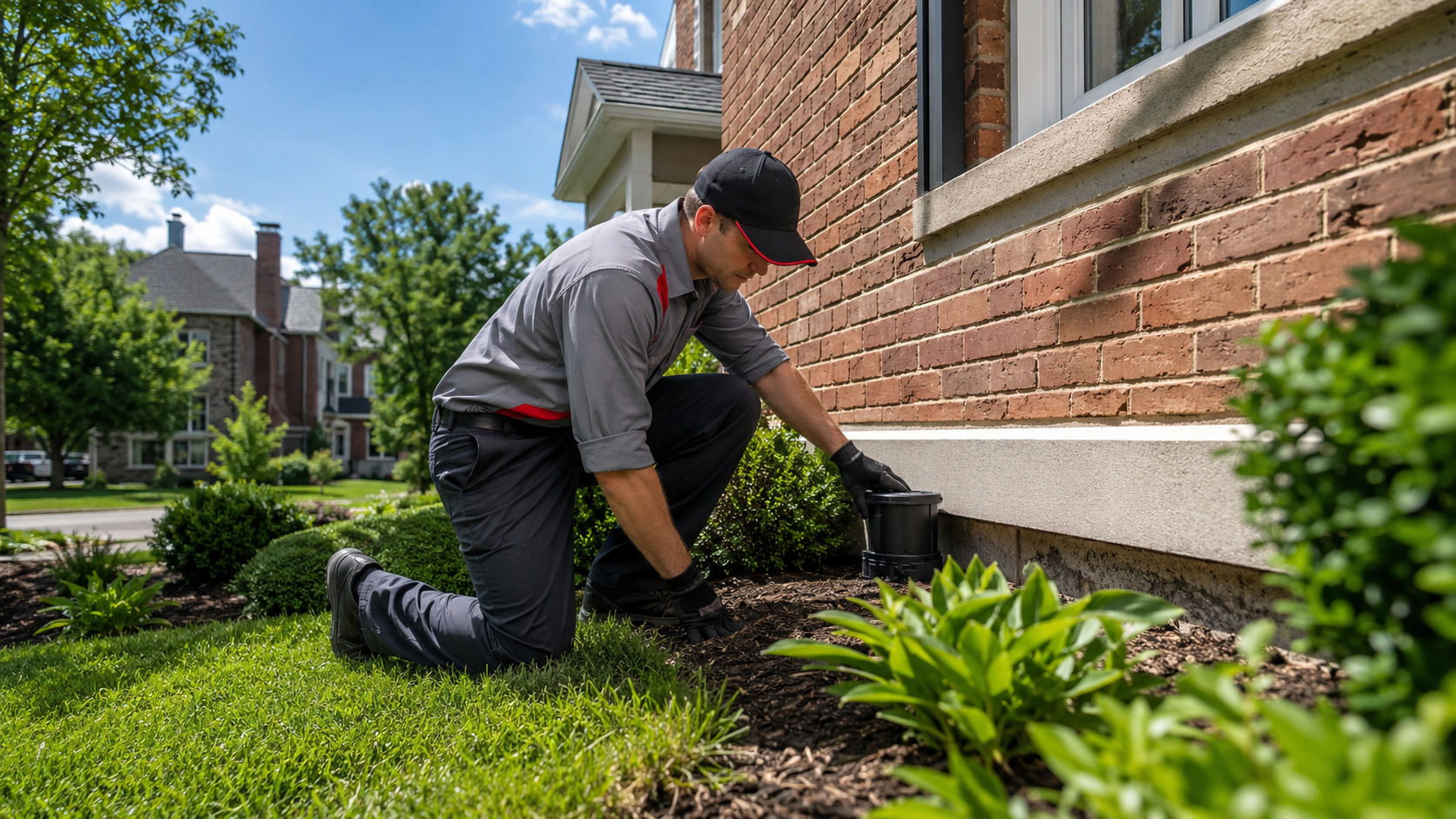
Trelona is a termite baiting system. Stations are installed in the soil around the perimeter of the structure at regular intervals. Termites foraging in the area discover the bait and begin feeding on it; they share the bait with nestmates through normal colony behavior, and the active ingredient — a chitin synthesis inhibitor — prevents new termites from molting, gradually collapsing the colony.
Bait stations are the preferred approach when:
- There’s no current active infestation and the goal is monitoring and prevention
- The structure or lot makes liquid application difficult (landscaping, hardscape, environmental sensitivity around water features)
- The homeowner prefers a continuous monitoring system with regular technician check-ins
Trelona requires patience — it works over weeks to months as the colony is systematically eliminated — but it’s highly effective and keeps a licensed technician checking the perimeter regularly, which means any new activity gets caught early.
Which Is Right for Your Home?
The honest answer is: it depends on what you’re dealing with.
If you’ve found an active infestation — mud tubes, damage, or live termites in your structure — liquid treatment is typically the faster and more effective path. You want colony knockdown, not monitoring.
If you’ve never had termites, or you had treatment in the past and want ongoing protection, Trelona bait stations are a strong choice. They’re low-impact, they provide continuous monitoring, and they’re easier to maintain over time.
Some properties warrant both: liquid treatment to address an active infestation and bait stations installed afterward for long-term perimeter monitoring.
This is why the conversation matters. Delhi Pest Control inspects your property and your situation before recommending anything. We’ll tell you what we’re seeing, what the options are, and what makes sense — then you decide.
Termite Treatment in Cincinnati
Termites are not a “wait and see” situation. The damage they cause is structural and cumulative, and it’s almost always invisible until it’s significant. The Cincinnati area has active subterranean termite pressure, and any home with wood framing and soil contact has some level of exposure.
If you haven’t had a termite inspection in the last few years — or you’ve seen swarmers, mud tubes, or soft spots in wood anywhere in your home — give us a call.
Delhi Pest Control is licensed, locally owned, and has been protecting West-side Cincinnati homes from termite damage since 1982. We’ll give you a straight answer about what you’re dealing with and what it’s going to take to fix it.