
Pests Do Not Take the Winter Off in Cincinnati
A lot of homeowners treat pest control like lawn care: something you think about in spring and drop when the first frost hits. It is an easy mistake to make. You stop seeing ants on the patio and wasps at the back door, so it feels like the problem went away.
It did not go away. It moved. When the temperature drops, mice, rats, cockroaches, spiders, and a long list of overwintering insects look for the same thing you do: a warm, dry place with food and water nearby. Your house is that place. Winter is when most of the pests that cause real trouble are actually inside it.
What Is Living in Cincinnati Homes Right Now
Winter pest activity looks different from summer, and it is quieter. Most of it happens in wall voids, attics, basements, crawl spaces, and behind appliances, which is why people often do not notice until it is a bigger problem.
Mice and rats. This is the big one. Rodents are the most common winter pest we deal with in Cincinnati. They do not hibernate, they breed indoors where it is warm, and they can fit through a gap about the size of a quarter. Older homes in Westwood, Price Hill, Delhi Township, and Green Township have plenty of them around foundations, utility lines, and basement windows.
Cockroaches. German cockroaches cannot survive an Ohio winter outside, but a heated kitchen suits them fine. Holiday cooking, extra groceries, and delivery boxes give a small hidden population everything it needs to grow.
Spiders. Spiders follow their food. If insects are wintering in your basement and garage, spiders are there too, and they stay active all season.
Overwintering insects. Stink bugs, boxelder bugs, and similar pests slip in during the fall and settle into attics and wall voids. On a warm winter afternoon, or when the furnace kicks on, they wake up and show up in your living room. We covered this in more detail in our guide to why stink bugs invade Cincinnati homes every fall.
Ants. Most ant colonies go dormant outside, but carpenter ants can stay active inside a damp wall or a leaky bathroom, and you may not know until spring.
Why a Winter Treatment Beats Waiting for Spring
If the pests are already inside, why not wait until you see them? There are a few good reasons not to.
You treat the problem while it is small. A handful of mice in November is a very different job than a family of them in March. Rodents reproduce quickly, and every month they go unnoticed makes the cleanup bigger. The same is true of roaches. Early service means fewer visits and less disruption.
Pests are concentrated and easier to reach. In summer, pests spread across your whole yard and the neighborhood. In winter, they are packed into a few warm, sheltered areas in and around your home. A licensed technician who knows where to look can treat those areas directly.
You protect your home, not just your comfort. Mice chew wiring and insulation. Rodent droppings and urine contaminate stored food, boxes, and attic insulation. Droppings can carry bacteria, and nobody wants to find out in April what has been living in the ceiling all winter. Catching it early is cheaper and safer.
You start spring ahead. Pests that overwinter inside are the same ones that come out in force when it warms up. Dealing with them in winter means a lot fewer ants, spiders, and roaches showing up in the first warm weeks.
Winter service fits the way pest control is supposed to work. A single spray is a reaction. Seasonal, scheduled service is prevention. Skipping winter leaves a long gap in your protection, exactly when pests are looking for a way in.
What Winter General Pest Treatment Actually Includes
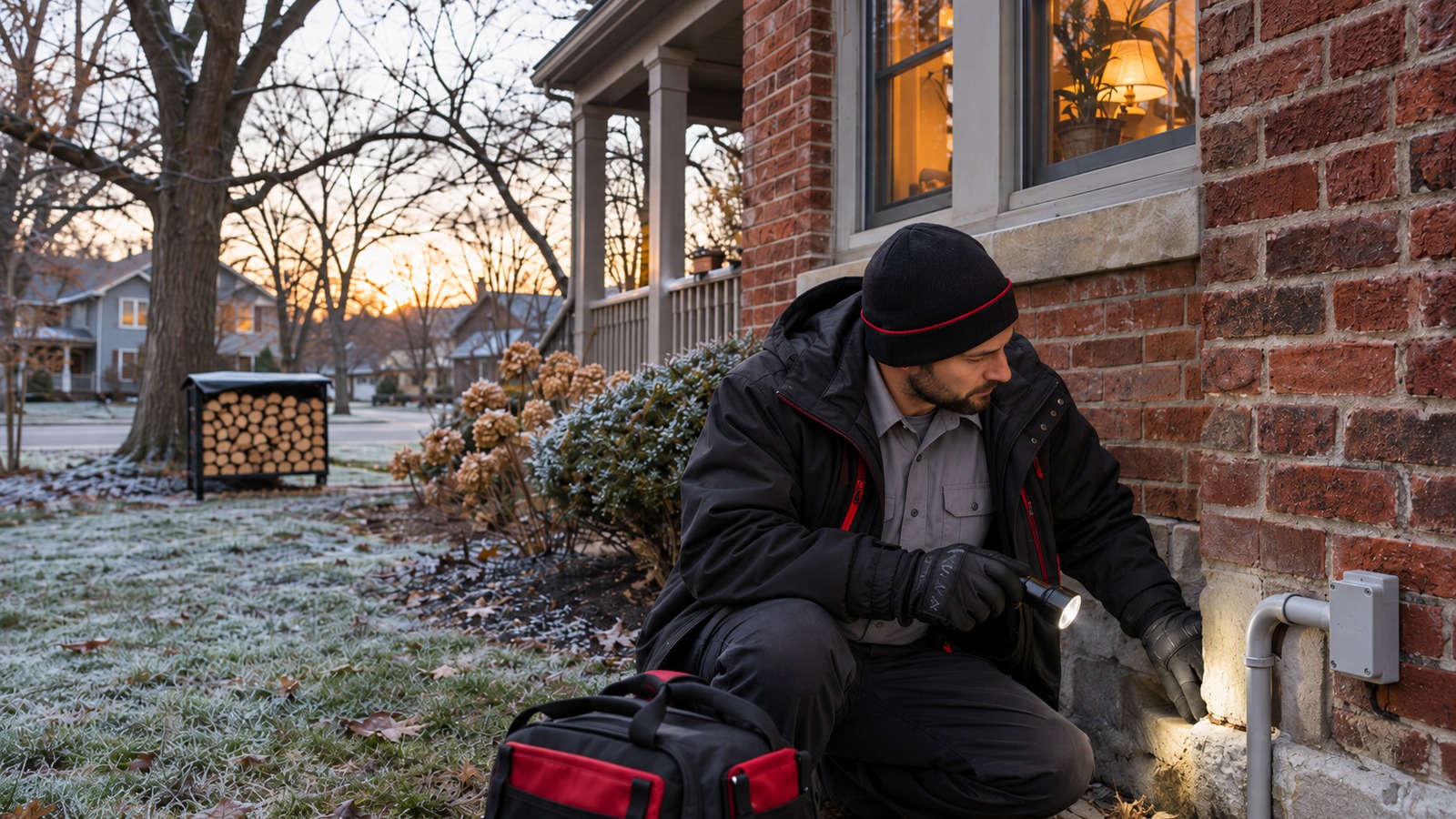
A good winter visit is not a quick spray around the baseboards. It starts with an inspection, because the goal is to find out what is going on and how pests are getting in. A licensed Delhi Pest Control technician looks over the exterior and the places pests shelter inside, checks the common entry points around the foundation, doors, vents, and utility lines, treats the areas where pests are active or likely to hide, and tells you what we found and what you can do to help.
That last part matters. We will point out the gap by the dryer vent, the door sweep that no longer seals, the firewood stacked against the siding, or the slow drip under the sink. Pest control works best when the treatment and the home work together. For a look at what routine service covers, see our general pest control page.
How the Tri-Shield Plan Covers Winter
This is where a plan makes the most sense. Tri-Shield is one plan with three layers of protection: Pest, Mosquito, and Termite. The Pest layer is the foundation, and it is built around quarterly service. That means four scheduled visits a year from a licensed technician, so one of those visits always lands in the colder months instead of leaving a six-month gap between fall and spring.
The Pest layer also includes rodent protection. That is important because rodents are the pest most likely to cause real damage in winter, and they are exactly the kind of problem that grows when nobody is looking. With Tri-Shield, a technician is already on your schedule to check for signs of activity, address entry points, and handle rodent concerns before they turn into a project. If you want to understand more about how we handle them, our rodent control page and our Cincinnati rodent guide are good places to start.
Here is what that means in practice during winter:
- No gap in coverage. Your winter visit keeps the protective barrier around your home in place when pests are most motivated to get inside.
- Early detection. Rodent and roach activity is found at the first sign, not after months of growth.
- Someone to call. If you hear scratching in the attic in January, you already have a licensed local company that knows your home.
- Coverage that fits your home. The Mosquito layer is seasonal, and Termite coverage is set up for your property by proposal, so you are not paying for protection your home does not need.
To be straight with you, not every home needs a plan. If you have a single, clear problem, one targeted treatment can be the right answer. If you want to stay ahead of pests all year, quarterly service is the more reliable way to do it. Either way, we will give you an honest recommendation.
What You Can Do This Week
While you decide, a few simple steps make your house less attractive to winter pests. Walk the outside of your home and look for gaps around pipes, vents, and the foundation. Check door sweeps and weatherstripping. Store food, pet food, and birdseed in sealed containers. Move firewood and clutter away from the house and out of the garage corners. Fix leaks and dry out damp areas under sinks and in the basement. Break down cardboard instead of stacking it.
None of this is just our opinion. The National Pest Management Association gives the same basic advice in its winter pest guidance for homeowners: seal entry points where pipes and utility lines come in, fix moisture problems, store food in airtight containers, cut down clutter, and check grocery bags and boxes before they come inside.
If you already hear or see signs of activity, such as scratching in the walls, droppings, gnaw marks, or roaches in the kitchen at night, do not wait for spring. It only gets harder to deal with.
Licensed Winter Pest Control for Cincinnati Homes
Delhi Pest Control has protected Cincinnati homes since 1982. If you are hearing noises in the walls, seeing roaches, or you simply want a quiet, pest-free winter, give us a call. A licensed technician will take a look, tell you what is going on, and recommend the right fix, whether that is a single treatment or year-round protection with Tri-Shield.
📞 (513) 451-1800
Delhi Pest Control, 4737 Delhi Rd, Cincinnati, OH 45238. Licensed and locally owned in Cincinnati since 1982.